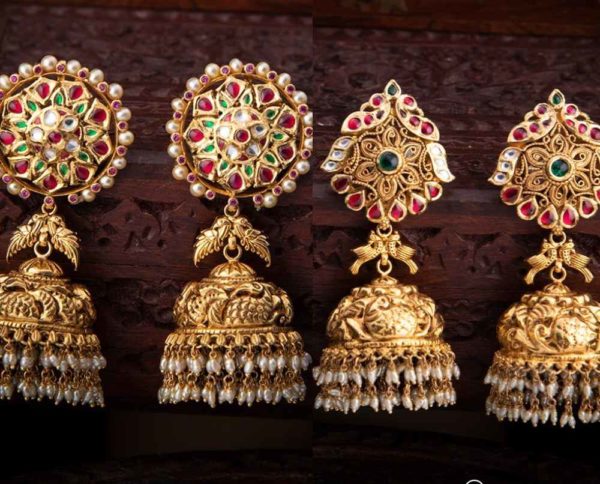
[PHOTO: a close, sharp shot of a pair of antique gold nakshi jhumkas, dome and bell clearly visible, from /2023/05/antique-nakshi-peacock-jhumkas.html]
Few pieces of jewellery are as loved in the South as the jhumka. It is small, it moves when you move, and it frames the face better than almost anything else you can wear. Yet when you start shopping for one, the words come thick and fast: temple, kemp, nakshi, polki, buttalu, jhumki. This guide sorts them out in plain language, so you can recognise each style, understand how it is made, and choose the pair that suits your necklace and your occasion.
What exactly is a jhumka?
A jhumka is a bell-shaped earring. It has three basic parts: a stud or top that sits on the ear, a dome (the upper, rounded part), and a hanging bell, often fringed with small beads or pearls at the bottom. The word jhumka is most common in Hindi-speaking regions. In Telugu homes you will hear buttalu for the same family of earrings, and in Tamil and Kannada households the words jhumki, kammal or similar names are used depending on the family and the district. Names vary, but the bell shape is what ties them together.
Most traditional jhumkas also have a support, either a chain that loops over the ear (sometimes called a maatal or sahara) or a firm hook. Heavier jhumkas often come with this support so the weight does not pull on the earlobe.
Temple jhumkas
Temple jewellery takes its inspiration from the ornaments that adorn deities in South Indian temples. In earrings, that means gold with figures and motifs drawn from the temple: Goddess Lakshmi, Ganesh, peacocks, lotus petals, and sometimes coin-like kasu designs. Temple jhumkas are usually worked in gold or in gold-polished silver, often with an antique finish, and can be set with rubies, emeralds, or uncut stones.
Two things make temple jhumkas easy to spot. First, the motif is usually clearly carved or embossed rather than hidden behind stones. Second, the finish tends to be warm and slightly matte rather than mirror-shiny.
- Deity motifs: Lakshmi and Ganesh are the most common. You can see a Ganesh pair in our antique nakshi Ganesh jhumkas.
- Peacock motifs: the peacock is a favourite across Tamil Nadu, Andhra and Karnataka. Compare the styling in antique peacock nakshi jhumkas and peacock nakshi kundan jhumkas.
- Matching sets: temple jhumkas are most often worn with a Lakshmi haram or kasu mala, as in this Lakshmi haram and jhumkas set.
Kemp jhumkas
Kemp jewellery is known for its red stones. The word kemp refers to the red, ruby-like stones, traditionally real or synthetic rubies, set in gold-toned bases. Kemp jhumkas often follow the temple design vocabulary but add bright red (and sometimes green) stones to the dome or the face of the earring. In many families, kemp pieces are chosen for festivals and dance performances because the colour photographs beautifully under bright lights.
When people say "kemp" today, they sometimes use it loosely for any temple-style piece with red stones. The distinction can vary by region and by jeweller, so it is worth asking what a seller means by the word before you buy.
If you like the red-and-gold look but want a more classical finish, our antique gold kasu necklace and jhumkas set shows how warm antique gold works with this kind of palette.
Pearl jhumkas
Pearls soften a jhumka. In traditional designs, tiny seed pearls often fringe the bottom of the bell, or a row of larger pearls hangs from it like a small tassel. In more modern designs, the whole bell may be pearl-covered, or a single drop pearl may dangle from a gold dome.
Pearl jhumkas are a good choice when you want something lighter and gentler than heavy gold. They also pair naturally with pearl necklaces and chokers. See how pearls and colour come together in Khushalii Kumar's green stone pearl choker and jhumkas, and how a more contemporary pearl-and-diamond tassel earring looks in Upasana Konidela's diamond and pearl tassel earrings.
One practical note: pearls are delicate. Keep them away from perfume, hairspray and sweat, wipe them gently after wearing, and store them separately so harder stones do not scratch them.
Diamond jhumkas
Diamond jhumkas are the choice for weddings, receptions and special family functions. They come in several broad styles:
- Classic cut diamond: bright, sparkly, and usually worn with a diamond necklace or choker. Browse the pair in diamond jhumkas or a matching set like the diamond necklace and jhumkas set.
- Polki and uncut diamond: polki uses uncut or minimally cut diamonds that have a softer, glassy glow rather than a sharp sparkle. Many people find this look more traditional. See polki diamond peacock buttalu and uncut diamond panchlada and jhumkas.
- Diamond with colour: emeralds and rubies add richness and are very popular in the South. See diamond emerald jhumkas, diamond emerald buttalu and emerald polki earrings.
- Simple everyday diamonds: smaller, lighter pairs worn with a slim necklace. The simple diamond necklace and jhumkas set is a good reference.
Whether a stone is a real diamond, a polki, or an imitation such as cubic zirconia (CZ) changes the price and the care it needs, but not always the look from a distance. CZ jhumkis, like these CZ peacock jhumkis, are a lighter-on-the-pocket way to enjoy the same shapes.
Antique and nakshi jhumkas
"Antique" in jewellery usually describes a finish, not an age. An antique finish is a deliberately darkened, slightly matte gold tone that makes carved details stand out. Nakshi refers to fine hand-engraved or chiselled work, often floral or deity-based, that gives these earrings their depth.
Antique and nakshi jhumkas are the heart of South Indian bridal and festive dressing. They sit well with silk sarees, especially in deep reds, greens and temple-border colours. Good examples to study include antique nakshi peacock jhumkas, kundan nakshi jhumkas and antique gold kundan jhumkas. For a lighter modern take on the same finish, see Malavika Mohanan in antique gold jhumkas and stacked bangles.
How to match jhumkas with your necklace
A jhumka is rarely worn alone for a big occasion. A few simple guidelines help you choose:
- Match the metal and finish. Antique gold jhumkas look best with an antique gold haram, not a shiny white-stone choker.
- Match the mood, not every motif. If your necklace is heavy with deities, a simpler pair of jhumkas with one clear motif will look balanced.
- Let one piece lead. A very bold choker works best with medium-sized jhumkas; a plain neckline can carry larger, statement pairs.
- Think about the hairstyle. Large jhumkas show best with hair tied up or a braid; hair worn down can hide them.
Sets that show good pairings include the antique gold kundan temple haram and jhumkas, the antique gold guttapusalu haram and jhumkas and the antique nakshi Lakshmi mango mala and jhumkas set. For chokers, look at the bridal diamond choker and jhumkas and the double decker diamond choker and jhumkas.
Choosing a size and weight
Jhumkas range from tiny studs-with-a-bell to long, heavy bridal pairs that fall past the jawline. When you try them on, check three things: how they sit against your neck and jaw, whether the weight pulls on the lobe, and whether the earring still looks good when you turn your head. If a pair feels heavy, ask whether a support chain can be added, which many jewellers can do.
Face shape is a guide, not a rule. Long drops often flatter rounder faces, while smaller, rounder jhumkas can balance longer faces. Wear what feels like you.
Caring for your jhumkas
- Put jewellery on after make-up, perfume and hairspray.
- Wipe with a soft, dry cloth after wearing.
- Store each pair in its own pouch or compartment, with the bells facing up so the fringes do not tangle.
- Keep pearls and soft stones apart from diamonds and hard metals.
- Have settings checked occasionally, especially for heavier pieces, since loose stones are easier to fix early.
Antique finishes should not be scrubbed or dipped in cleaning solutions, as this can strip the darker tone that gives them character. If you are unsure, ask the jeweller who made the piece how they recommend cleaning it.
FAQ
What is the difference between a jhumka and a jhumki?
Both describe the bell-shaped earring. Jhumki is often used for smaller, daintier pairs, while jhumka is used more generally. In practice the two words are used interchangeably, and local usage varies.
What does "temple jewellery" mean in jhumkas?
Temple jhumkas use motifs inspired by South Indian temple ornaments, such as Lakshmi, Ganesh, peacocks and lotus designs, usually in an antique gold finish.
Which jhumkas are best for a wedding?
There is no single answer, as it depends on family tradition and the outfit. Antique nakshi, polki, uncut diamond and diamond-emerald jhumkas are all popular for brides and for family members. Match them with the necklace and saree.
Are polki jhumkas the same as diamond jhumkas?
Not exactly. Polki uses uncut or lightly cut diamonds with a softer glow, while "diamond" jhumkas often use brilliantly cut stones. Both can be real diamonds, but they look different.
How do I stop heavy jhumkas from hurting my ears?
Choose a pair with a support chain, wear them for shorter periods first, and make sure the posts and backs fit your piercing well. If the weight still bothers you, a lighter pair is a better choice.
Can I wear jhumkas with western outfits?
Yes. Smaller antique or pearl jhumkas work well with kurtas, fusion dresses and even plain shirts. Keep the rest of the jewellery minimal so the earrings stand out.